Planning production around Chinese New Year
Chinese New Year slows or stops much of Chinese manufacturing for weeks. How to plan orders, freight, quality checks and stock so the holiday does not leave you without product.
By Filippo Rovelli
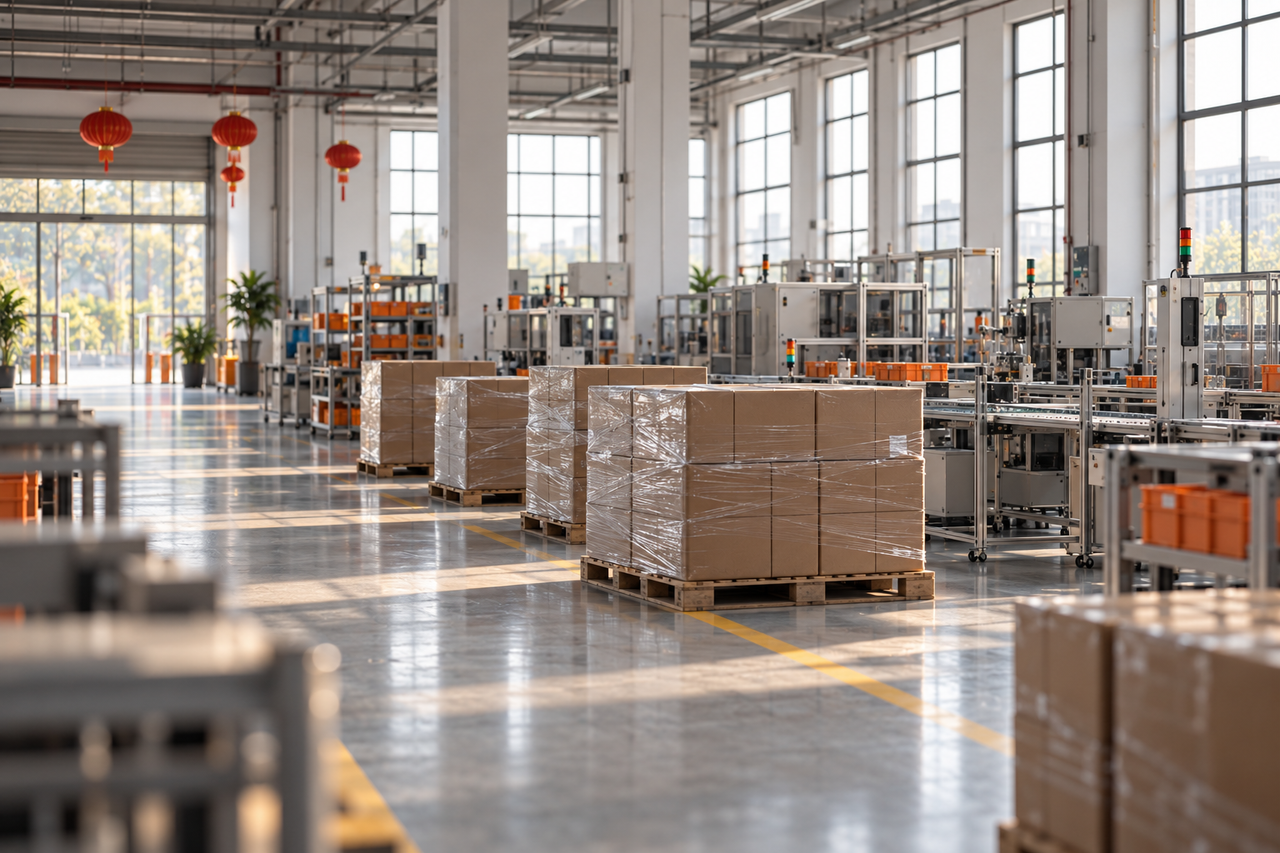
Every year, Chinese New Year slows or stops a large part of Chinese manufacturing. Everyone knows it is coming, and every year it still catches companies out.
The problem is rarely the holiday itself. It is the weeks around it. Material suppliers close early, freight gets tight, workers travel home and the restart is slower than anyone planned. If your products are made in China, this needs to be in your plan months ahead.
In 2027, Chinese New Year falls on 6 February. Here is how we plan around it.
The real timeline is longer than the holiday
The official public holiday is around a week. The effect on production is much longer. A realistic picture looks like this.
The weeks before. Factories try to finish as many orders as possible before the break. Capacity is full, and late orders are often turned away or pushed to after the holiday. Material and component suppliers usually close before the factories do, so anything not bought by then waits. Freight demand peaks as everyone tries to ship at once.
The closure. Many factories stop completely. Workers who live far away travel home, often leaving before the official start and returning after it. For many factories, the total stop is two to four weeks, but this varies a lot.
The restart. Some workers do not come back. Factories hire and train new staff while working through a backlog of delayed orders. Output is slower, and the risk of mistakes is higher for the first weeks.
Add these together and a holiday of about a week can mean a month or more of disrupted production.
Start with dates from every supplier
Do not plan on general assumptions. In the autumn, ask each factory and key component supplier for three dates in writing:
- the last day they can accept new orders for delivery before the holiday
- the day production stops
- the day they expect to be back at full output
The answers differ from one factory to the next, sometimes by weeks. Put them in one calendar next to your own sales plan.
Work backwards from the last ship date
For each order that must ship before the break, work backwards from the factory’s last shipping date. Allow time for:
- buying materials, especially anything custom or printed
- production
- inspection, and any rework that inspection finds
- freight booking and getting the goods to the port
For many products, this means orders need to be confirmed in October or November. If you need a new sample round, the timeline starts even earlier.
Decide which orders truly must ship before the holiday and which can wait. Not everything needs to go out in January. Trying to push every order through the same narrow window is how quality slips.
Book freight early
In the weeks before Chinese New Year, many shippers compete for the same space. Rates often rise and space can be hard to find. Talk to your freight forwarder early, share your expected ready dates and book as soon as you can.
If your goods are ready early, consider shipping early. A few extra weeks in your warehouse is usually cheaper than a stockout.
Protect quality on both sides of the break
The pressure to ship before the holiday is real, and it is exactly when corners get cut. Keep your normal inspections in place. Do not skip a pre-shipment inspection to make a vessel. A failed shipment found in your warehouse costs far more than a delayed one found at the factory.
After the holiday, treat the first production runs with extra care. With new staff on the line, an inspection during production can catch problems before the whole order is made. Make sure the factory still has your approved golden sample and current specification at hand.
Hold enough stock to cover the gap
The final question is simple: how long can you sell without new goods arriving?
Count the weeks from the last shipment before the holiday to the first shipment you can realistically expect after it. Add the transit time to your warehouse. Then check that your stock covers your expected sales for that whole period, with a margin for a slow restart.
For e-commerce businesses, this period often follows straight after the year-end peak, when stock is already low. Plan the January replenishment with that in mind, before the Christmas orders have even shipped.
Keep communication open through December
In Europe, December brings its own holidays. Decisions that need an answer from your side, such as sample approvals, artwork sign-off or payments, can stall in the last weeks of the year. That is exactly when your factory needs answers to make its pre-holiday cut-off.
Agree in advance who on your side can approve what in December, and ask the factory who you can contact during their closure if something urgent comes up.
A simple planning calendar
- September and October: collect closure dates from every supplier. Review sales forecasts for the first quarter.
- October and November: confirm orders that must ship before the holiday. Approve samples and artwork. Buy long lead-time materials.
- November and December: book freight. Plan inspections. Make sure payments go out on time.
- January: final inspections and shipments. Confirm reopening dates.
- February and March: inspect the first production after the restart. Watch lead times closely until output is back to normal.
How we help
We are based in Guangdong and work through Chinese New Year every year. We help companies collect real dates from their suppliers, build a production and freight plan around them, and follow the orders on the ground through the busy weeks before the break and the slow weeks after it.
If you want to check your plan for the 2027 holiday, book a consultation and we will go through it with you.
Topics
Questions about Supply Chain
When is Chinese New Year in 2027?
Chinese New Year falls on 6 February 2027. The date moves every year with the lunar calendar, usually between late January and mid-February. Ask each supplier for their exact closing and reopening dates, because they vary by factory.
How long do factories close for Chinese New Year?
The official public holiday is around a week, but many factories stop for longer once workers travel home and back. Two to four weeks of lost production is a common planning assumption. Confirm the dates with each supplier.
Why do quality problems increase after the holiday?
Some workers do not return after the holiday, so factories hire and train new staff while trying to catch up on delayed orders. That combination raises the risk of mistakes. Plan inspections for the first production runs after the restart.
When should I place orders to ship before Chinese New Year?
Work backwards from the last date your factory can ship, allowing for materials, production, inspection and freight booking. For many products that means confirming orders in October or November. Your supplier can confirm their cut-off.